
Work/Questions
DNAstack · Publisher + ExplorerProduct strategyUX researchFeature designData privacy

Designing a privacy-preserving abstraction layer for millions of genomic records

Researchers had data but not answers, and custodians were afraid to give them direct access. Questions is the layer between raw tables and usable answers: custodians publish a safe, parameterized question once, and researchers get meaningful answers without wading through raw data or seeing sensitive patient information.

RoleDesign Lead
Timeline8 months
Year2024→2025
TeamPM, 8 engineers, bioinformatician, data scientist
Problem

Millions of records per table, and a trust gap

A single collection can hold hundreds of tables, and each table can hold millions of variant records. One table I worked with had about 49 million rows. Researchers had the data but not the answers, and custodians couldn't safely open it up.

One collectionCoLoRS, one of many on the network
Hundreds of tables
Raw tables inside it
Small variantsmillions of rows
Structural variantsmillions of rows
Allele frequencymillions of rows
Variants by genemillions of rows
Sample metadatasex, race, case status
+ more

Data without answers

Hundreds of tables, each with millions of variants, and no way to ask a clinical question of them.

Overwhelming without context

Is this variant rare? Benign or pathogenic? Linked to disease? Raw rows can't say.

Custodians fear access

Direct table access risks exposing identifiable patient information.

Researchers need clinically meaningful questions, not raw database rows.
We want to support research, but we can't risk exposing sensitive patient data.

What was missing: an abstraction layer between raw tables and usable answers. Raw data isn't research insight, and custodians need safety and control.

Strategy

An abstraction layer between raw tables and answers

My work was everything that turned Questions into a product people could trust: the two user journeys, the custodian safety model, the researcher experience, and the post-launch roadmap. I mapped the end-to-end research workflow across lab technicians, bioinformaticians, principal investigators and clinical geneticists to find where Questions fit in their day.

Raw tablesCustodian's environment
Identifiable data
Questions · the abstraction layer
Parameterized SQLWritten once by the custodian
Typed variablesRequired, validated inputs
PreviewTested before anyone runs it
Access policiesWho can ask the question
ResearchersFill inputs in Explorer
Aggregated answers
Design approach

Two journeys, one system

Custodians do the hard work once. Researchers get meaningful answers without wading through raw tables or seeing sensitive patient information.

Custodian · Publisher

Done once, used by many

Define tables→SQL with variables→Configure inputs→Preview→Publish
Researcher · Explorer

Clear answers from simple inputs

Browse questions→Fill inputs→Submit→Explore aggregated results

The variable system is what makes a question reusable across both journeys. I prototyped the end-to-end flow, from creating a question in Publisher to querying it in Explorer, before it went to engineering.

Solution

Author, test, share, explore

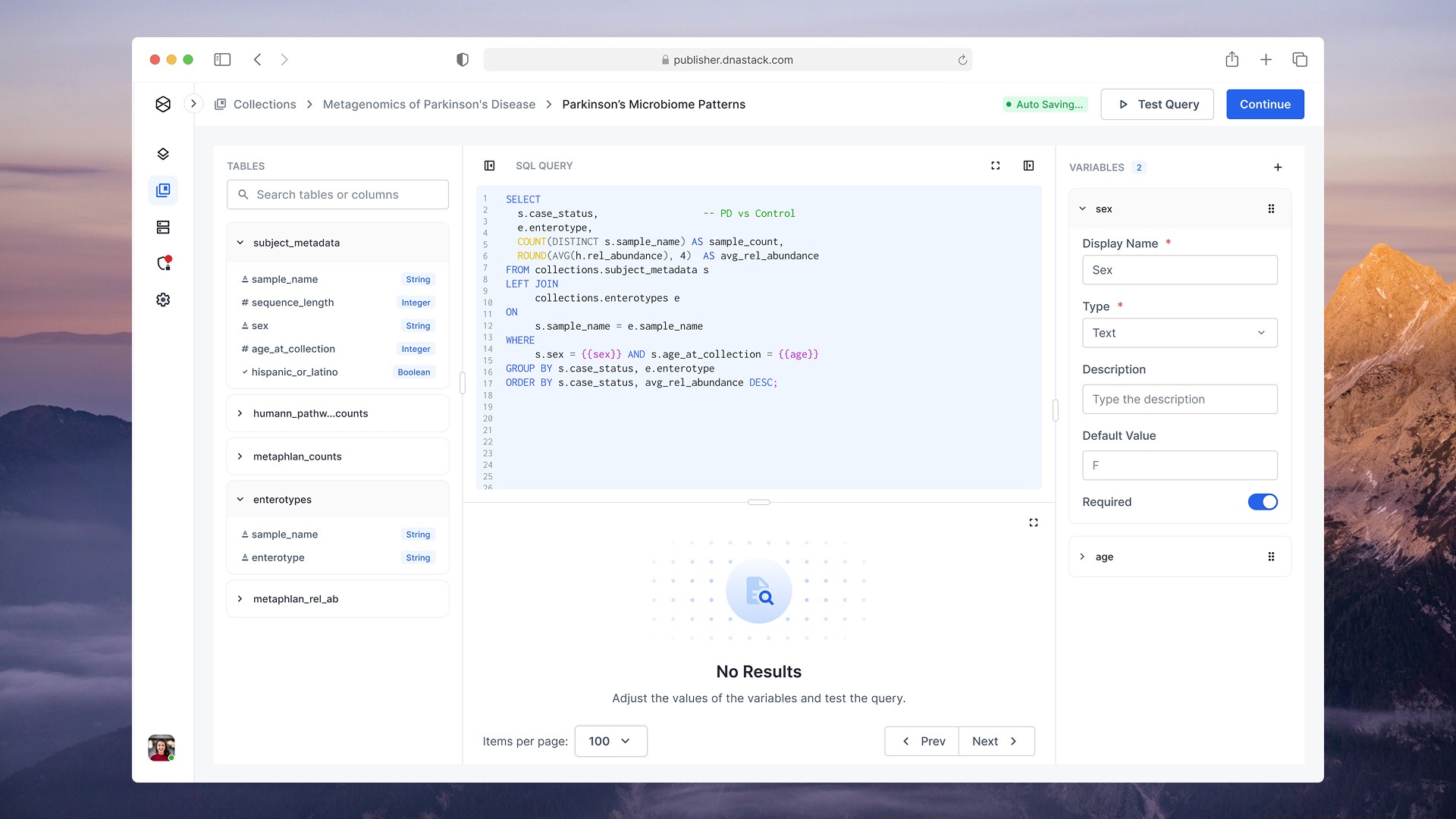
Questions final UI: Author a question
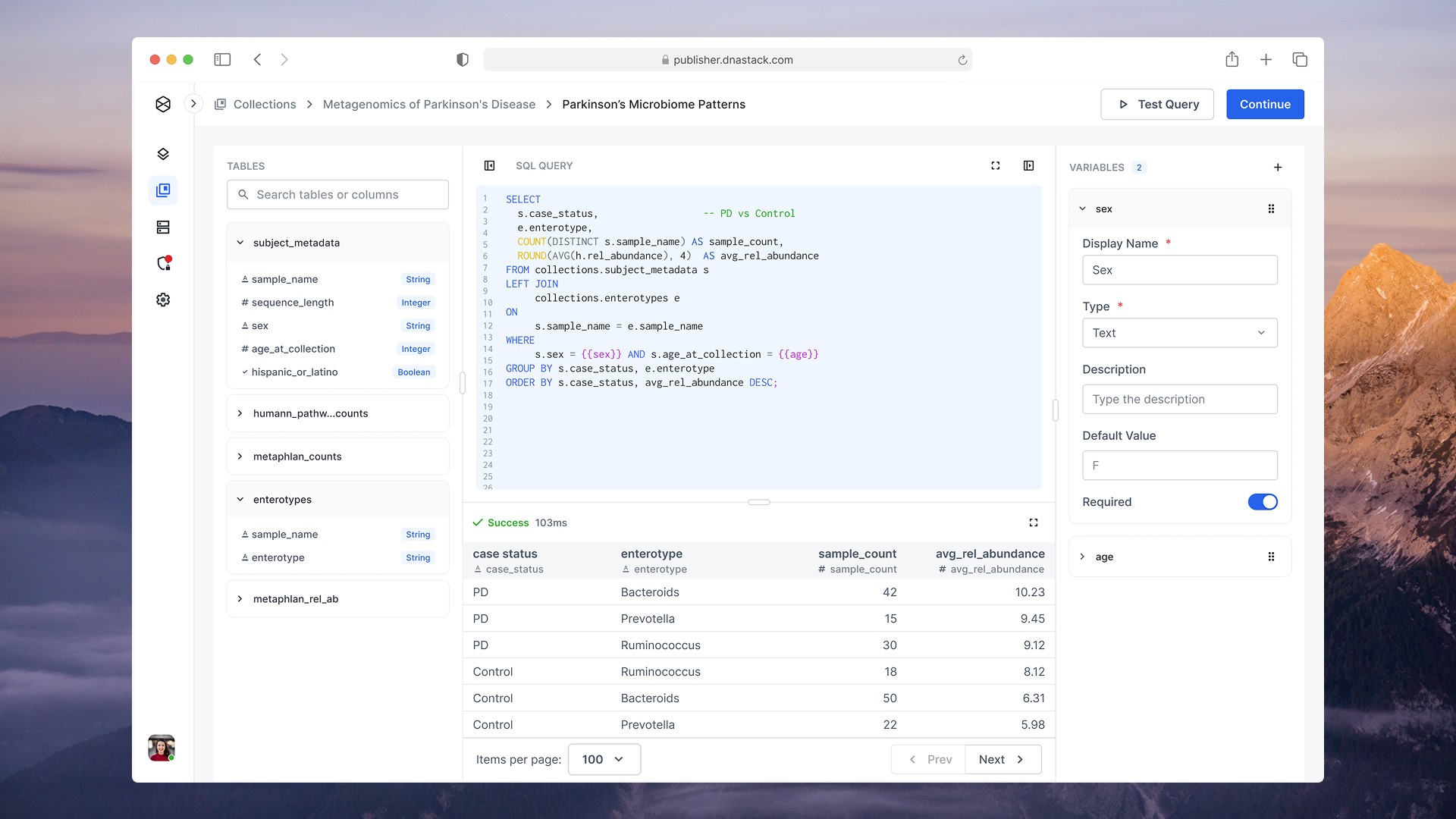
Questions final UI: Test it
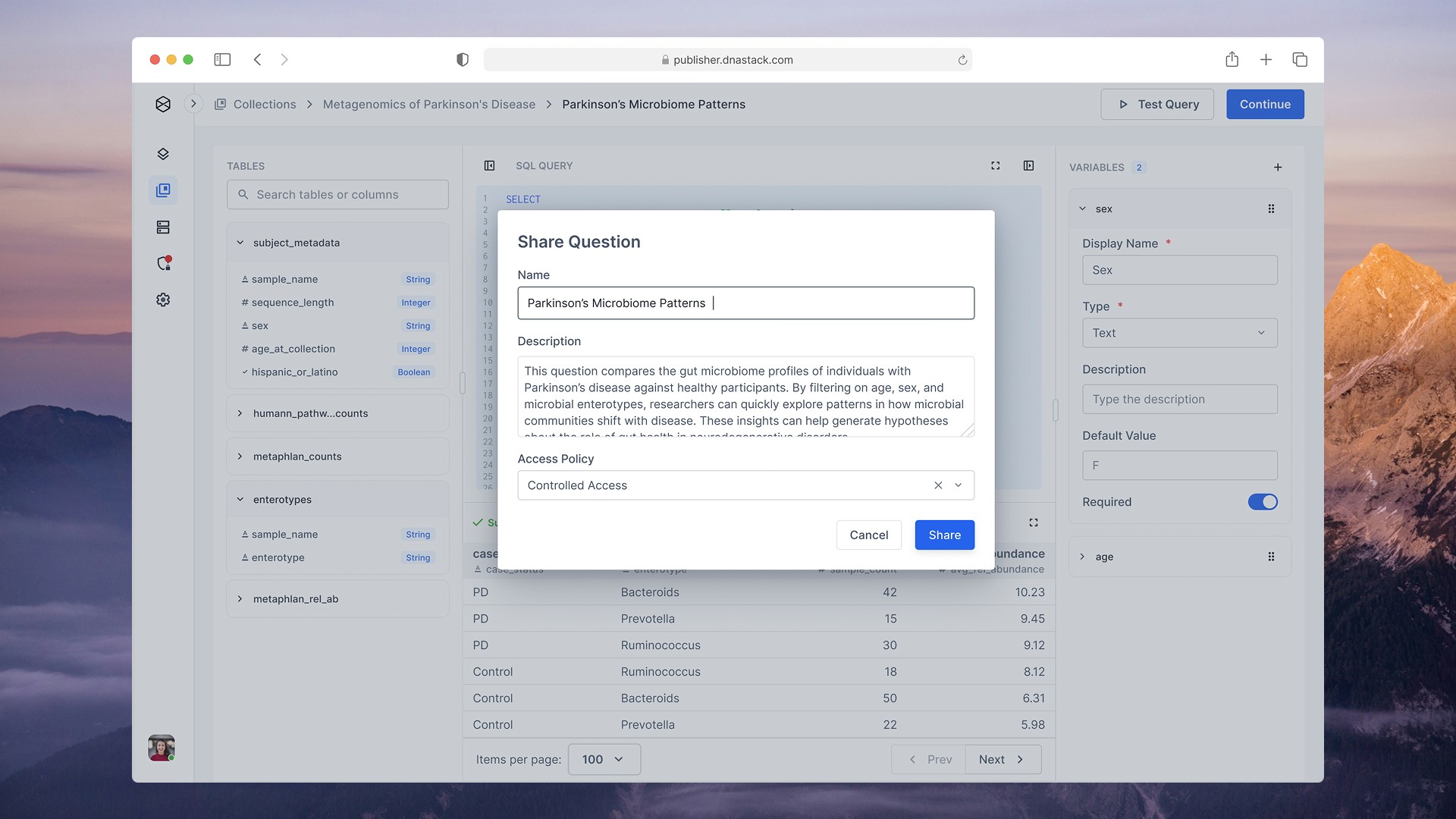
Questions final UI: Share it safely
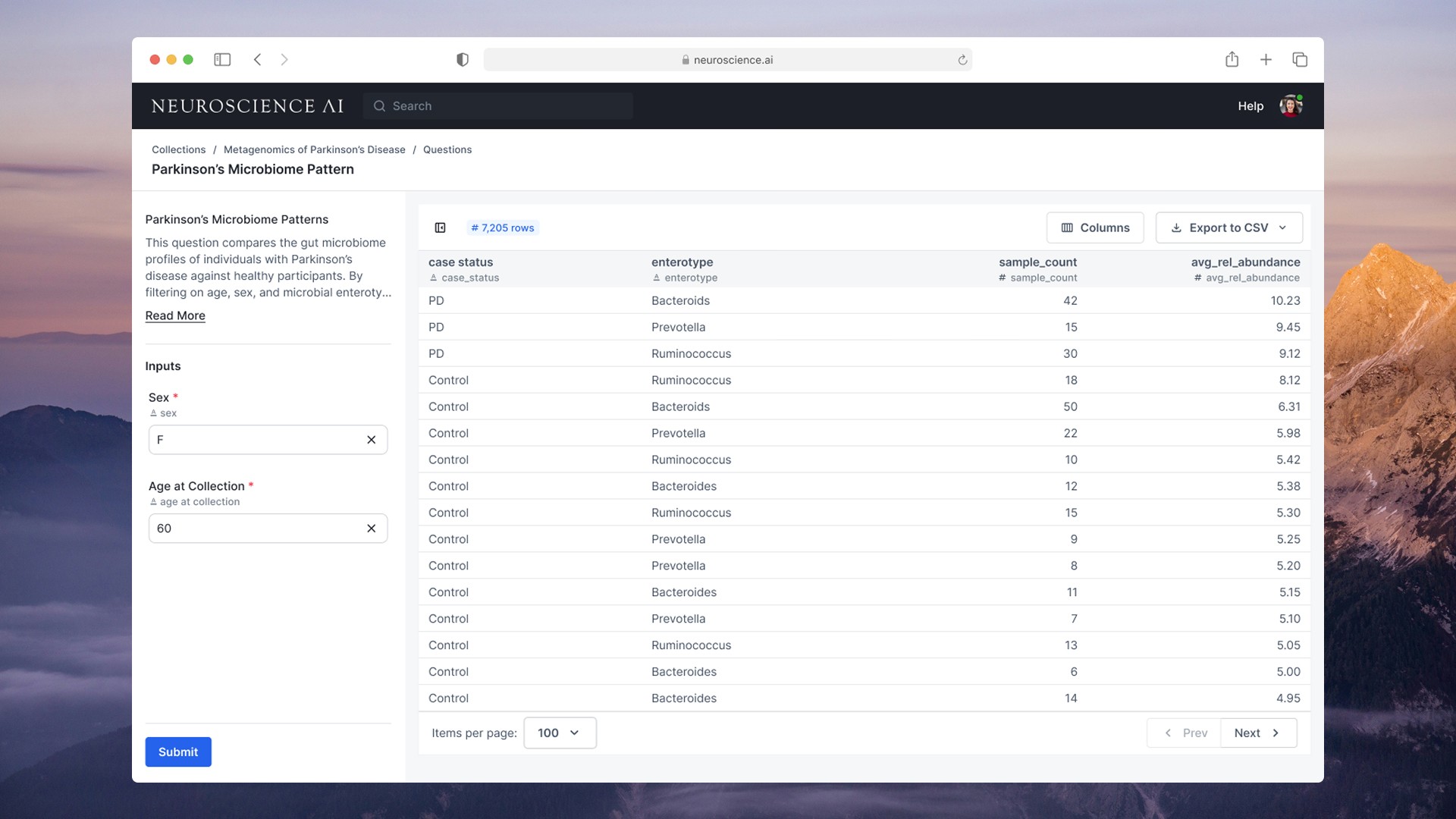
Questions final UI: Explore results
1 / 4
Impact

First 90 days

The feature validated DNAstack's platform as a globally viable research tool.

45%

of sessions came from outside North America

1 in 5

users returned within the same month

30%

of users stayed longer than 30 minutes

65%

of users found the published questions highly relevant to clinicians

Post-launch decisions

Shaping the next chapter

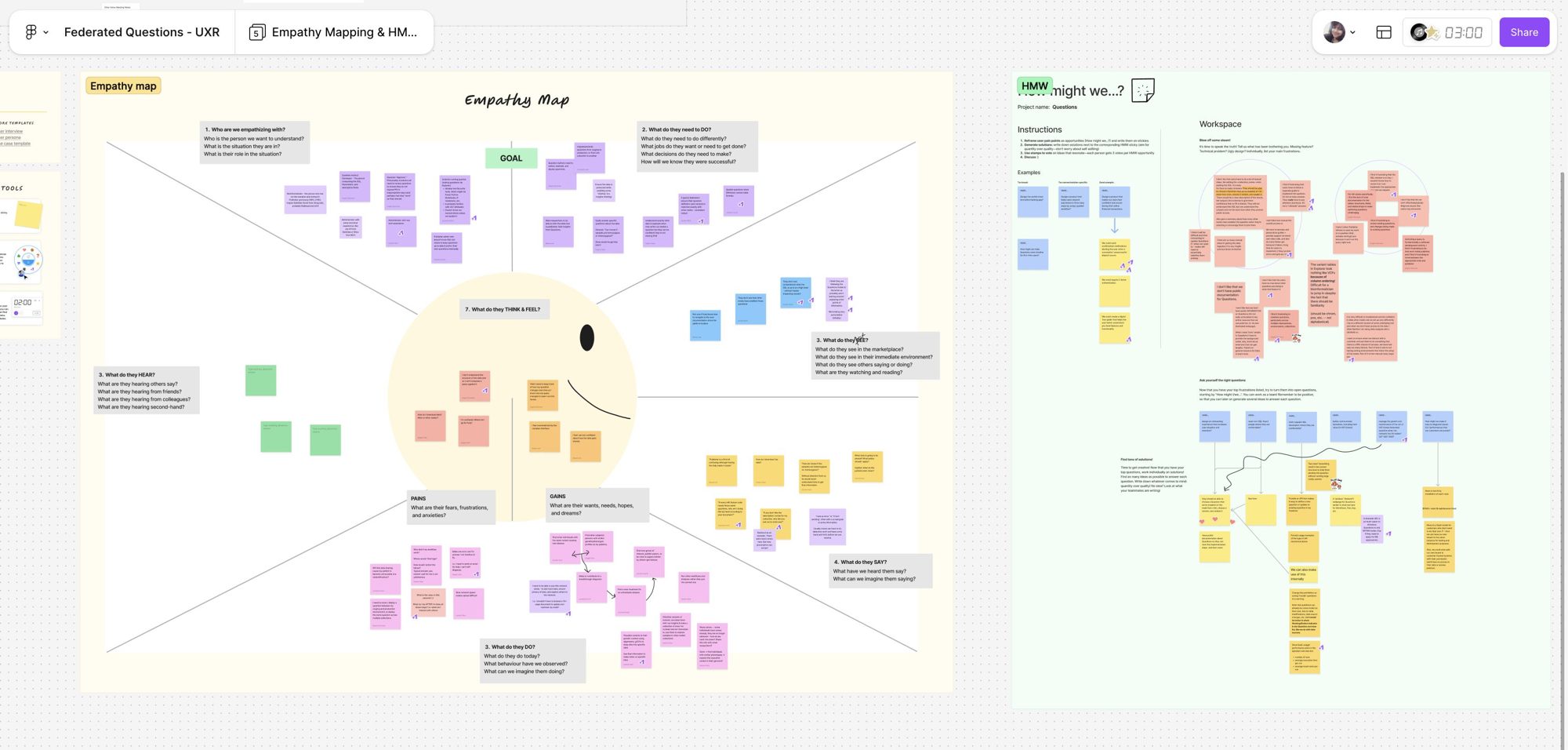
After the MVP launched, I took the lead on improving Questions. I ran feedback sessions, empathy mapping and how-might-we workshops with researchers and custodians. Two audiences came through: technical users who wanted scale, and custodians who weren't comfortable writing SQL. Each need became a stage of the roadmap, agreed in tradeoff discussions with product, engineering and the bioinformaticians.

Empathy map and how-might-we workshop boards from Questions user research
Empathy mapping and how-might-we boards from the feedback sessions.
Now

Programmatic access

"I would like to ask questions at scale. Querying 1000s of variants one at a time slows everything down."

I worked with engineering to shape a CLI and Python library so researchers could list questions, read their parameters and run them in bulk from their own pipelines. It came first because it extended questions custodians had already published, with no new privacy risk.
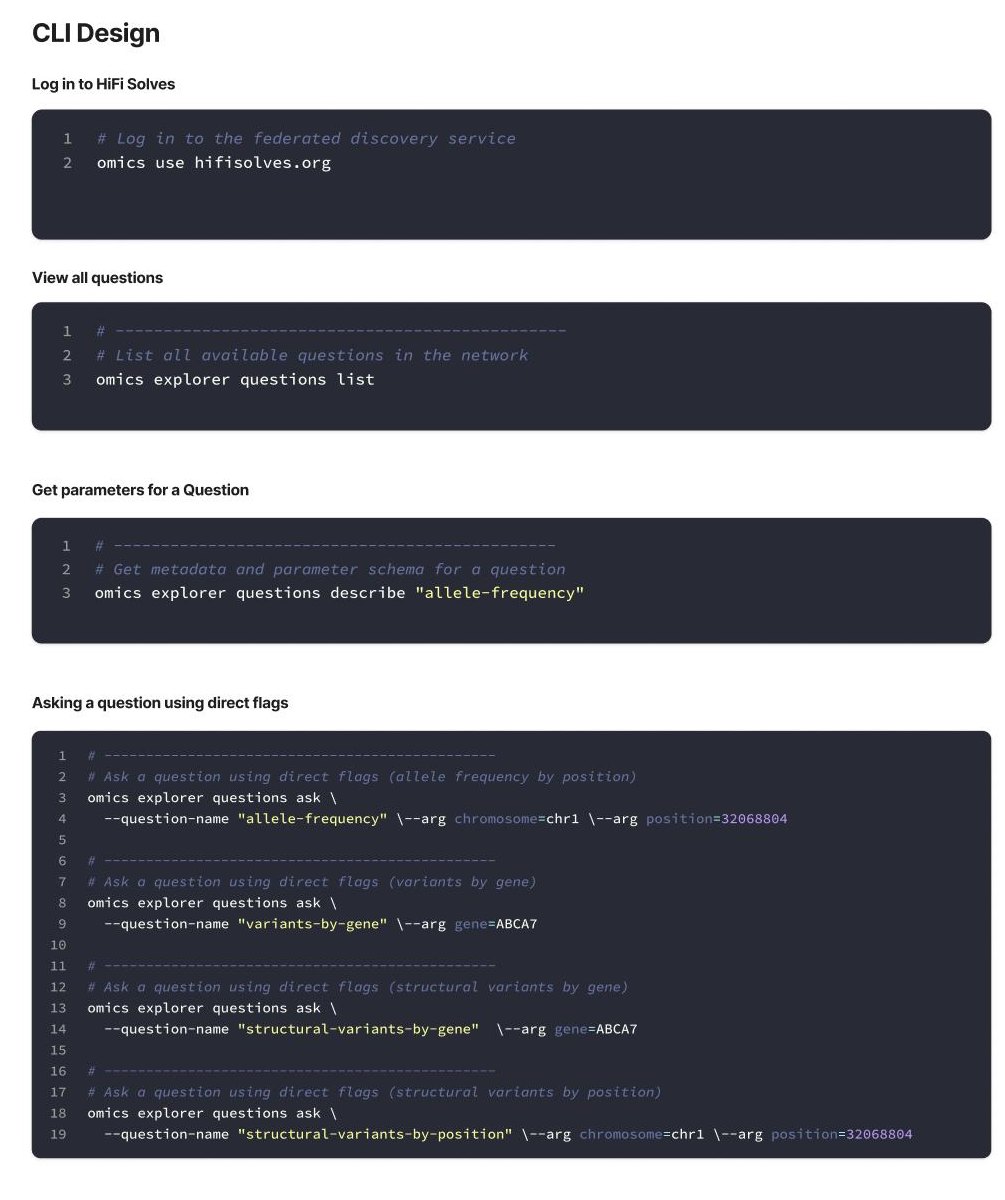
CLI design for asking Questions from the command line
Next

Standardized templates

"Honestly, I wish there were templates for common research questions. I'd rather configure than code."

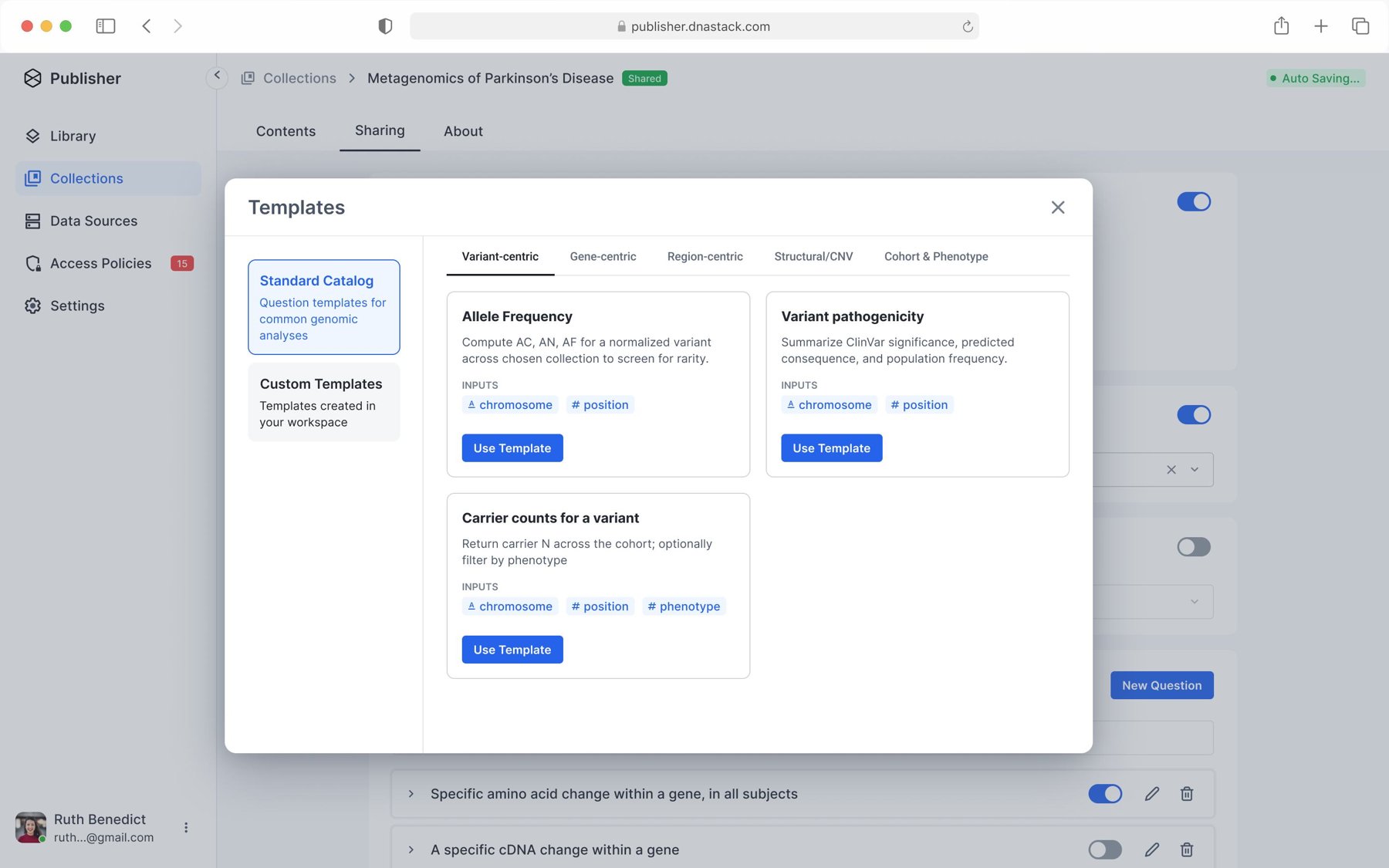
Not every custodian was comfortable writing SQL. I worked with the bioinformaticians to find scientific questions that hold up across many datasets, like allele frequency and carrier counts, and turned them into templates custodians configure instead of code.

Templates catalog in Publisher
Later

AI-assisted SQL authoring

"I know the data really well, but I'm not confident writing SQL joins. I worry I'll make a mistake and expose sensitive fields."

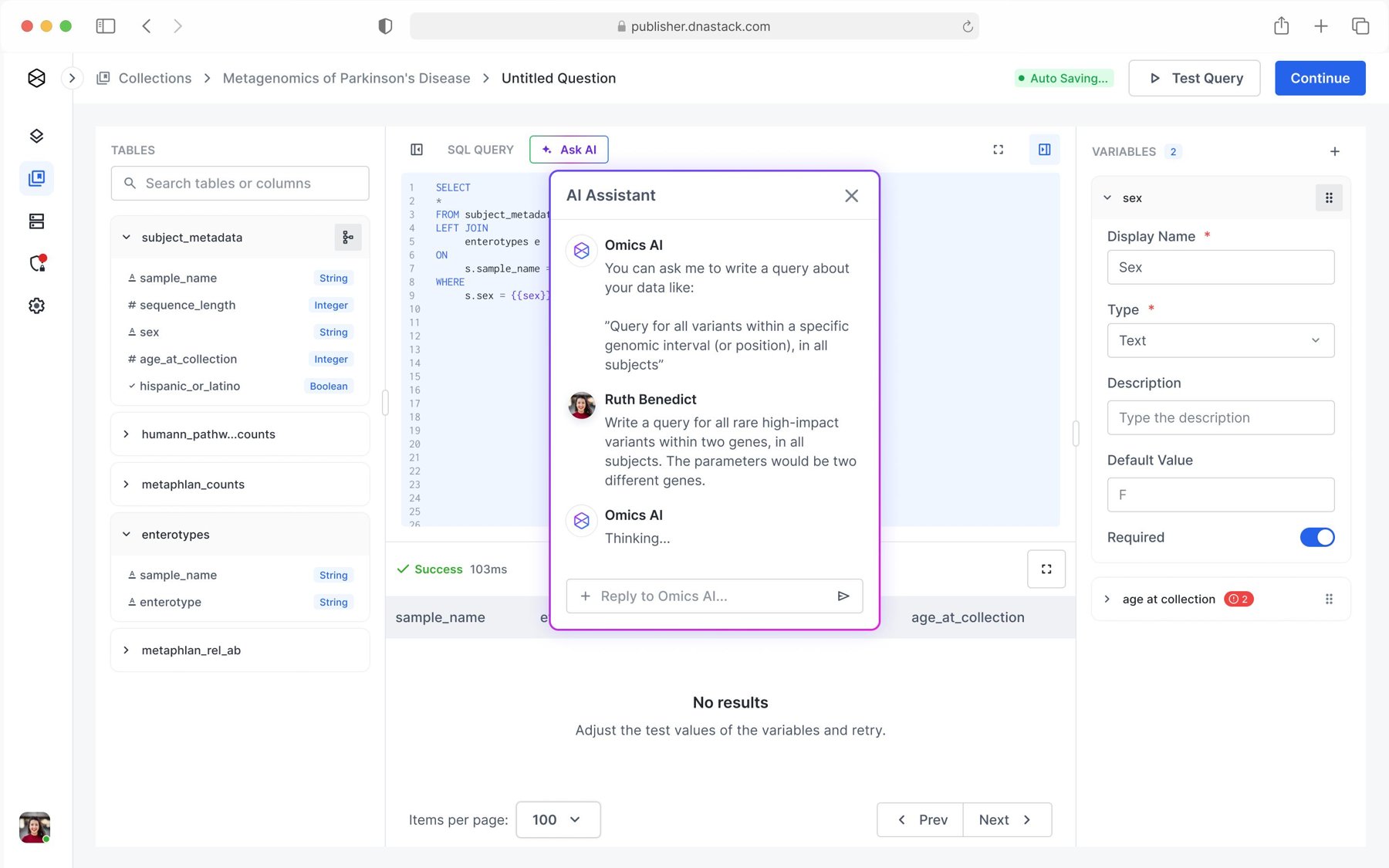
Templates cover common questions, but non-technical custodians still needed a way to write their own. An AI assistant in the query editor drafts SQL from a plain-language request. We placed it after templates because a drafted query that exposes a sensitive field is exactly what custodians feared.

AI assistant drafting a query in Publisher