Every Amazon order, broken down to what you actually bought
Bank statements show Amazon as one lump sum. TrueSpend breaks each order into items, sorts needs from impulse buys, and spots the things you keep reordering.
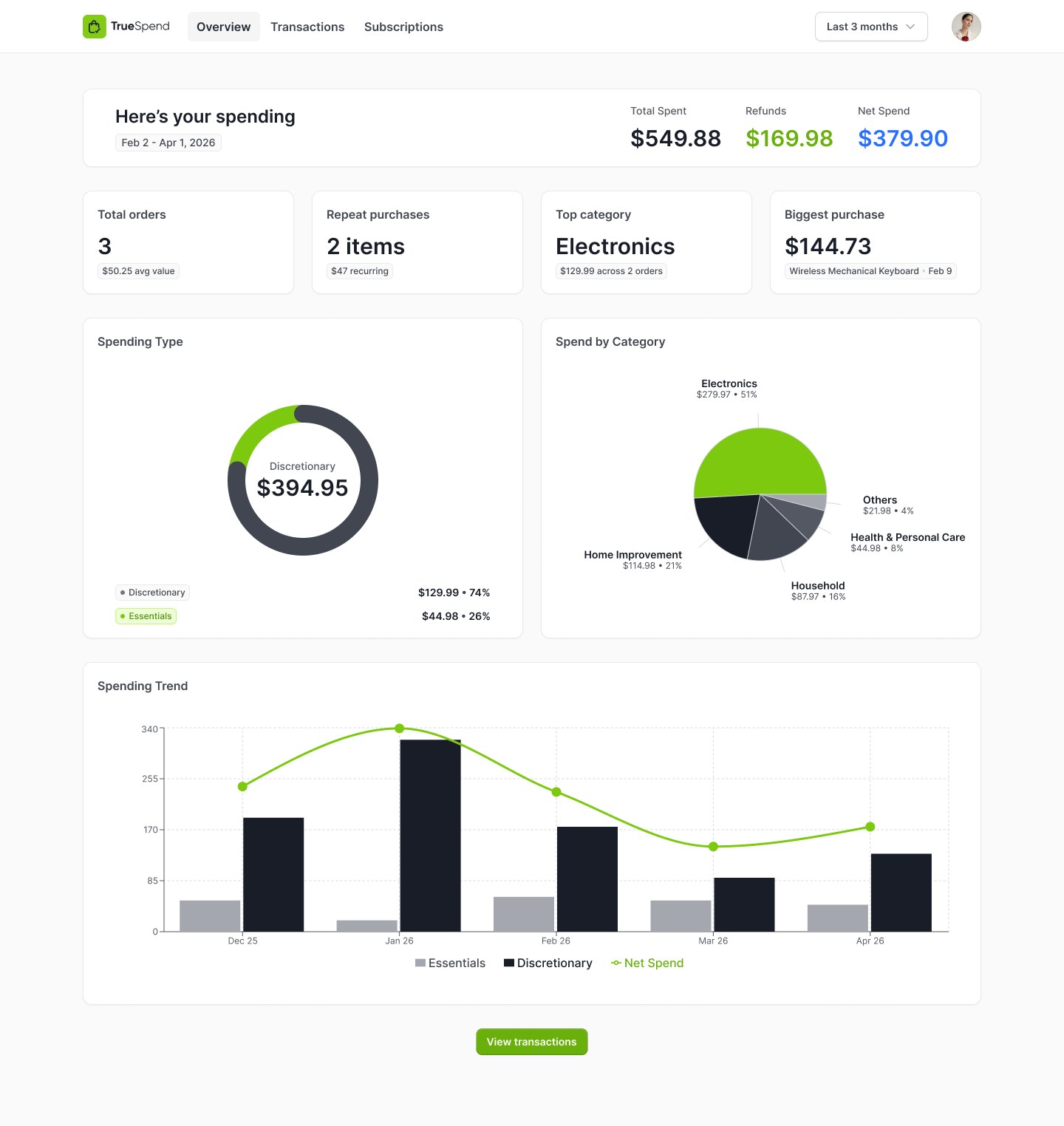
What I set out to fix
Budgeting apps file every Amazon charge under "Shopping." You can't tell the toilet paper from the impulse buy, so you can't tell where the money went.
A utility for one question: where did my Amazon money go?
TrueSpend makes that one opaque category clear, then hands clean itemized data to the tools people already use.
AMZN Mktp CA*2K4T81QZ0AMZN Mktp CA*7HX02LB31What did you actually buy?
| Item | Category | Type | You paid |
|---|
Main problems I designed through
One checkout, three shipments, two charges, one refund
A statement can't connect them. If the numbers don't match what the bank shows, nobody trusts anything else on screen.
DecisionMake the order the unit, and always reconcile items back to the exact amount on the statement.
Amazon doesn't report per-item costs
Coupons, Subscribe & Save, gift cards, tax, shipping and refunds apply to the whole order. Without a real per-item cost, categories are wrong.
DecisionI worked out proportional pricing logic with AI so every item shows what you actually paid, and the items still add up to the charge.
Needs versus impulse buys
Category totals don't change behaviour. The question people actually ask is "did I need that?"
DecisionMark every item essential or discretionary. If you disagree, flip it and the charts update instantly. The system suggests, you decide.
Repeat buys quietly add up
Things reordered every few weeks become a big number a statement never shows as a pattern.
DecisionFlag steady-rhythm items as a possible Subscribe & Save and point people to check in Amazon, instead of overstating what we know.